
Signs to look for
Sounds in a wall, chewed packaging or droppings in cupboards can help locate activity. Note the room and time of day without disturbing suspected nesting areas.
How treatment starts
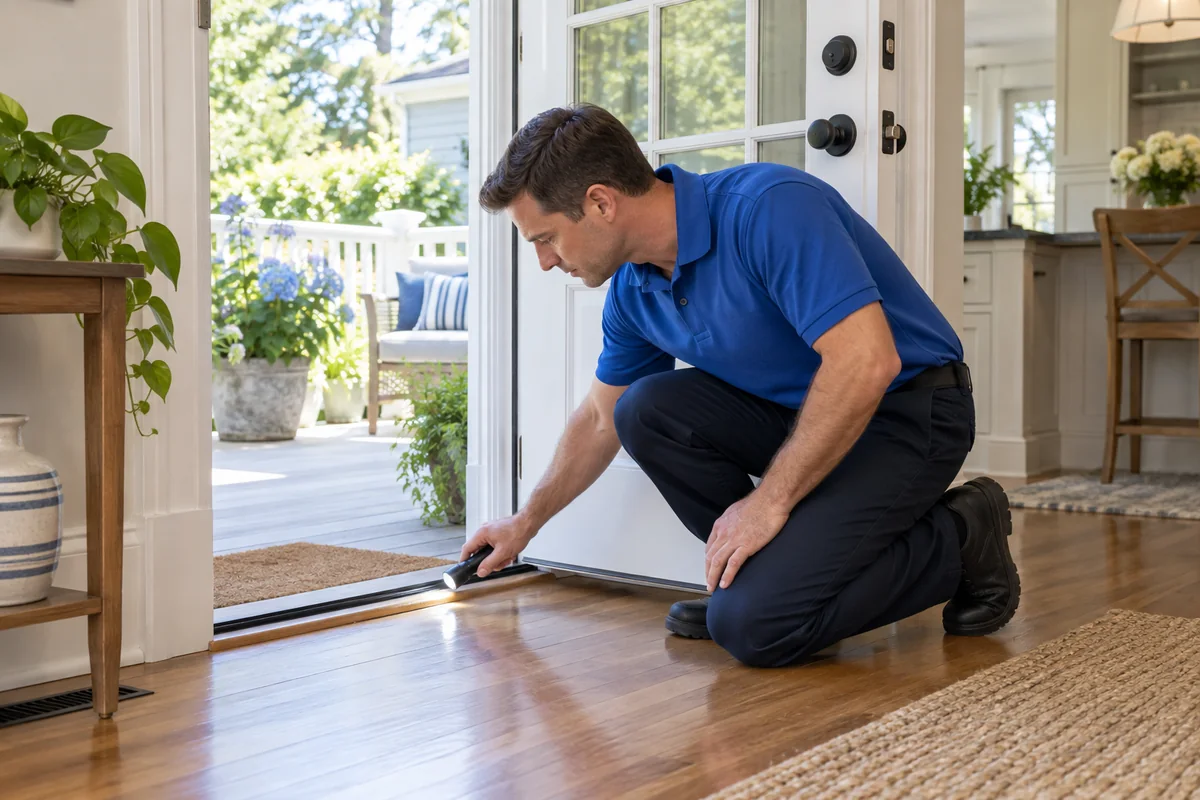
We trace likely travel routes around utility openings, doors and storage areas. The scope can bring together trapping, monitoring and repairs to accessible entry gaps.
Timing and follow-up
Several visits may be needed to assess progress and adjust the work. Your proposal should explain preparation, access, any re-entry instructions and the next review.
Prevention
Reduce accessible food, keep refuse enclosed and discuss durable repairs around pipes and doors. In shared buildings, adjoining spaces may also need attention.
What affects the price
The quote reflects the affected space, access, extent of activity and the work being proposed. Confirm whether monitoring, return visits and any repairs are included.
Common questions
Is a single visit enough?
Often, no. Inspection, control, monitoring and repairs may happen across several visits.
Can every hole be sealed right away?
The technician should account for active animals before closing routes that could trap them inside.